

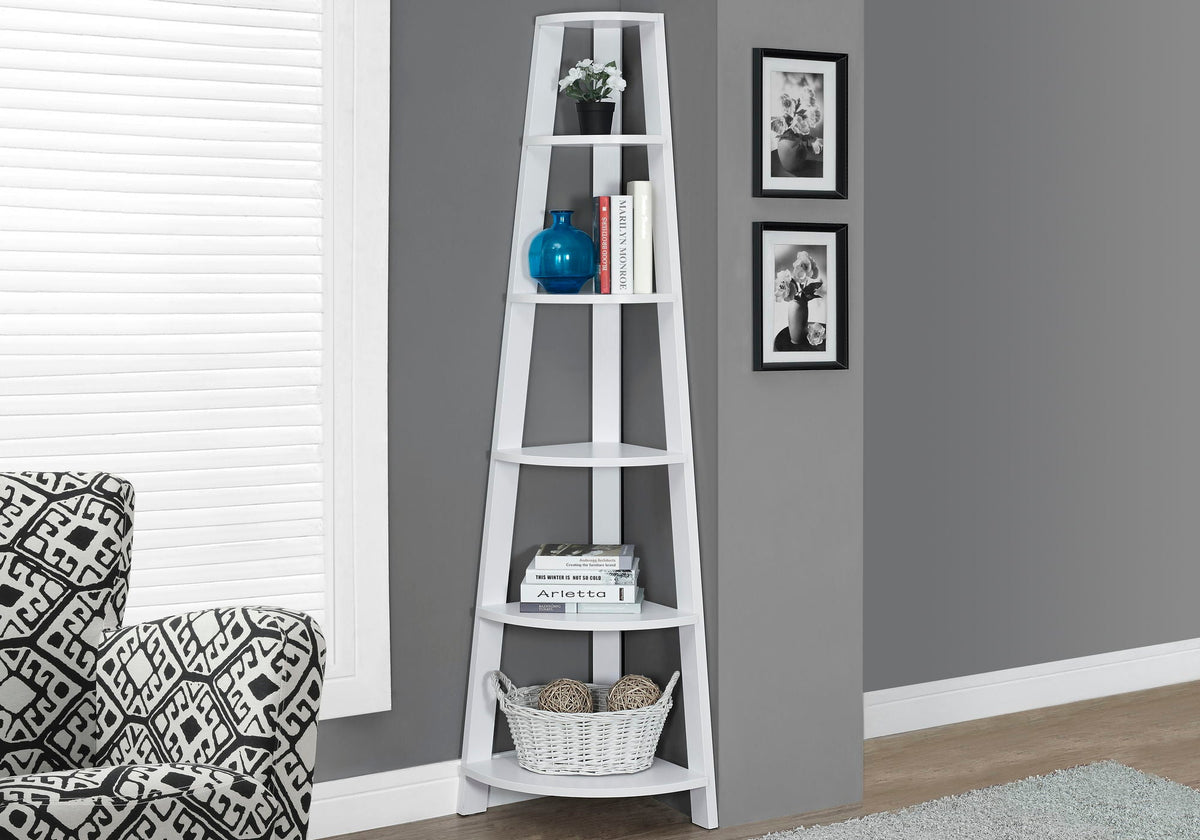
A corner bookshelf can turn an unused part of a living room or bedroom into useful storage. The best fit depends on its footprint, shelf shape and height, as well as what you want to store. A tall corner bookshelf may offer more levels while its upper shelves become progressively smaller.

Measure the corner, not just the wall
Measure the distance available along both walls and the floor area in front of the corner. Check baseboards, outlets, curtain movement and nearby doors. Use tape to mark the proposed footprint, then check whether you can still reach and walk past the shelf.
A product’s front width and front-to-back depth are not necessarily the lengths it occupies along each wall. Corner furniture can have a curved or triangular front. Use the dimension drawing to understand the shape and ask for wall-side measurements if your corner is particularly tight.
Choose between a small corner bookcase and a tall display shelf
A lower unit can keep everyday items within reach and leave wall space above. A tall unit provides more display levels but requires attention to ceiling height, access and installation. Count the usable shelves rather than assuming the highest shelf will suit your books.
For books, compare their height and depth with the shelf opening and usable surface. For plants, account for the pot and drip tray. Place heavy objects only within the documented load rating and follow the manufacturer’s placement and installation instructions.
Compare two Home Desk Express corner bookcases
| Bookcase | Listed overall dimensions | Shelf design | Price checked Oct. 10, 2026 |
|---|---|---|---|
| Five-tier corner bookcase, White | 22.5 in. L × 15.5 in. W × 71.25 in. H | Fixed tray-style shelves | $213.98 |
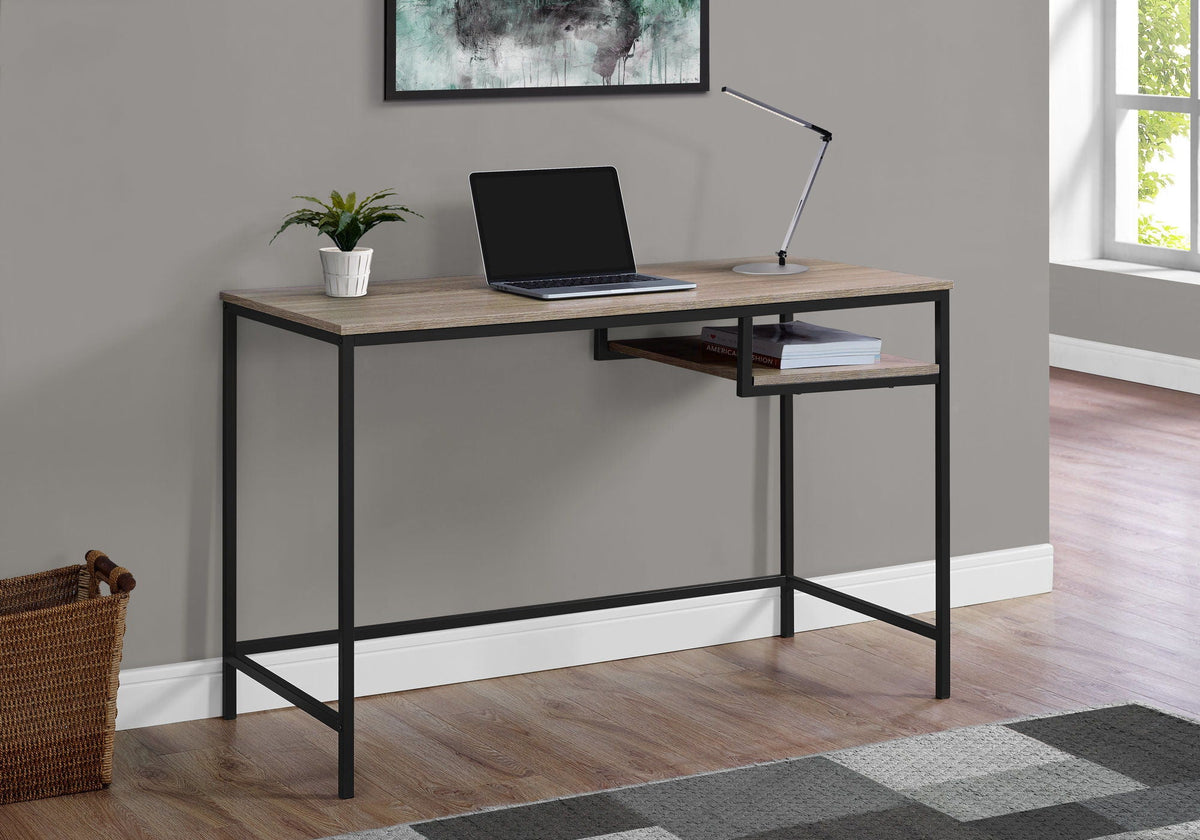
| Three-tier corner etagere, Taupe | 16 in. L × 12 in. W × 48 in. H | Open shelves with lipped sides; black metal frame | $147.98 |
Both examples had available inventory at the check. Price and availability can change. The five-tier model is described as particleboard; the three-tier model is described as a wood-look shelf surface with a metal frame. These descriptions do not establish solid-wood construction.
Look closely at shelf geometry
The five-tier model’s variant specifications list 22.5 × 15.5 × 71.25 inches, while its introductory description rounds these to 23 × 16 × 71 inches. Use the precise variant figures and the dimension diagram when planning a tight fit.
The diagram shows progressively smaller shelf surfaces toward the top. It also labels several spaces between shelves at 13.5 inches and a smaller upper opening at 10.25 inches. These vertical spaces and the overall footprint are different measurements. Check the diagram against the books or objects you intend to store.
Check load limits and installation
The current descriptions do not provide a verified per-shelf load rating for these examples. Ask for the manufacturer’s limits before planning heavy book storage. A photo with books does not establish weight capacity. Confirm assembly requirements, the supplied hardware and whether wall attachment is required; install according to the product instructions and your wall construction.
Style the shelf around its storage job
Choose a few objects that fit the actual shelf dimensions. Keep frequently used items accessible and allow room to remove them without disturbing everything else. A small collection of books, a framed photograph and a plant can work together, but the storage needs should determine the layout.
Browse bookcases or compare the two corner models above. Start with footprint and usable shelf space, then confirm the installation and load information.
Plan the rest of your room
Explore our narrow entryway storage guide and dining set with a bench guide for more ways to compare furniture by the space you have.

Leave a comment
This site is protected by hCaptcha and the hCaptcha Privacy Policy and Terms of Service apply.