

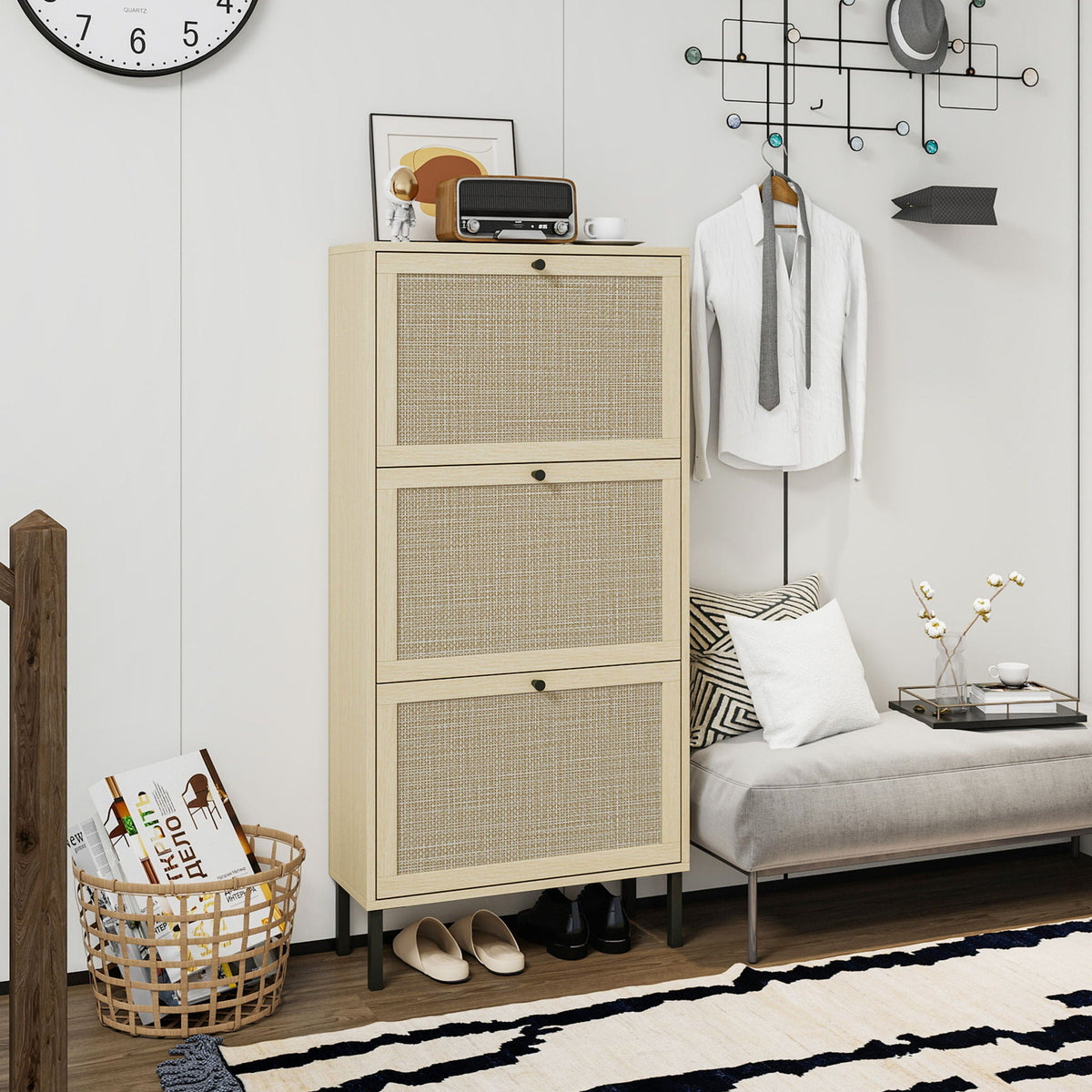
Narrow entryway storage works best when it makes coming home easier without crowding the route through your front door. Before choosing a slim shoe cabinet, an entryway storage bench or a hall tree, compare the furniture’s depth with the space you need to walk, open doors and reach your belongings.
This guide walks through the measurements that matter and compares three Home Desk Express options with listed depths of 9.25, 11.8 and 13.8 inches. The shallowest option is not automatically the right one: wall width, storage access and whether you need a seat matter too.
1. Measure your entryway before choosing storage
Record the usable wall width, the distance from that wall to the opposite obstruction, and the available height. Include baseboards, door trim, switches and nearby furniture. A cabinet may sit forward of a baseboard, so its listed depth may be less than the space it occupies once installed.
Mark the footprint on the floor with painter’s tape. Open the front door and any nearby closet doors through their normal travel. Walk past the taped area carrying the things you regularly bring home, such as groceries or a work bag.
Planning example: In a 48-inch-wide space, a cabinet that projects 9.25 inches from the wall leaves 38.75 inches before allowing for baseboards, handles or other obstacles. An 11.8-inch-deep cabinet leaves 36.2 inches under the same assumptions. These are arithmetic examples, not a clearance recommendation for every home; test your own route and access needs.
2. Compare closed depth with the space needed to open it
A slim shoe cabinet can fit against the wall and still need extra room when a drawer tips forward. Ask for the full projection with doors or drawers open, along with space to stand or bend down. None of the three listings compared below establishes a complete usable walkway with storage open.
A bench needs room for your knees and feet while seated. A hall tree needs space for coats and bags, which can project beyond its frame. Keep the door swing and the path through the entryway usable in everyday conditions, not just when the furniture is empty.
3. Choose a slim shoe cabinet, bench or hall tree
- Slim shoe cabinet: Start here when shoes are the main source of clutter and you prefer concealed storage. Compare interior compartment dimensions with your largest shoes.
- Entryway bench with storage: Consider this when sitting down to change shoes is a priority. Confirm the seat dimensions and documented weight limit, as well as storage access.
- Hall tree with shoe bench: Useful when you need hooks, shoe shelves and a seat in one place. Check overall height, hanging-item clearance and the manufacturer’s anchoring instructions.
4. Compare three Home Desk Express entryway options
The measurements and prices below apply to the named variants. Width describes the span along the wall; depth describes the front-to-back footprint. Product information and available inventory were checked October 10, 2026. Prices and availability can change.
| Option | Width × depth × height | Storage and materials | Checked price | Confirm before ordering |
|---|---|---|---|---|
| Modern Rattan 3 Door Shoe Rack Cabinet — Light Brown | 23.62 × 9.25 × 48.98 in | Three-door cabinet; natural particleboard version with rattan-style fronts | $154.98 | Interior shoe fit, pair capacity, open-door projection and installation requirements |
| Shoe Cabinet With Flip Drawers — White / 4 Flip Drawers | 46.9 × 11.8 × 43.4 in, rounded listing measurements | Steel construction, adjustable dividers and an included anti-tip device; listing states over 15 pairs | $364.98 | Capacity for your shoe sizes, full open projection and upper-drawer details |
| Hall Tree With Shoe Bench — Dark Brown / 25.2-inch-wide version | 25.2 × 13.8 × 72.8 in | Steel frame and particleboard; hanging rod, nine removable hooks, bench and shoe shelves; anti-tip kit listed | $144.98 | Bench and hook load limits, shelf spacing and clearance for hanging coats |
For the shallowest listed footprint: the light-brown rattan cabinet

At 9.25 inches deep, this is the shallowest of these three selected variants. Its 23.62-inch width also gives it a smaller wall footprint than the white cabinet. The listing does not establish a shoe-pair capacity, so check the interior measurements rather than estimating capacity from the photograph.
For a wider concealed-storage option: the white flip-drawer cabinet

This cabinet is only 11.8 inches deep when closed, but it needs approximately 46.9 inches of wall width. Its listing states capacity for over 15 pairs; actual fit depends on shoe size and style. The description and product heading differ on the upper-drawer count, so confirm that detail before ordering. The dimension image uses more precise figures of 46.85 × 11.81 × 43.39 inches.
For shoes, coats and a seat together: the compact hall tree

The 25.2-inch-wide version combines several entryway functions in one unit. It projects farther from the wall than either cabinet, and hanging coats or someone using the bench needs additional space. The same product page also lists a different 28 × 15 × 71-inch version; do not substitute its dimensions or price when planning for the smaller version.
5. Check materials, assembly and anchoring
Compare the construction of each component rather than relying on a broad “wood” label. The hall tree lists steel and particleboard, the white cabinet lists steel, and the light-brown rattan-style cabinet is identified as a particleboard version. Follow each product’s care and assembly instructions.
Confirm the installation requirements for your chosen variant and wall type. The white cabinet and hall tree list anti-tip hardware. Follow the manufacturer’s instructions and verify whether suitable wall fixings are supplied. Do not use a shoe cabinet as a seat unless it is specifically designed and rated for that purpose.
6. Make a final entryway-storage checklist
- Match the exact finish and size variant to your measurements.
- Check the front-door and closet-door swings.
- Allow for open storage, seated use and hanging items.
- Confirm shoe compartment dimensions, shelf spacing and any stated load limits.
- Review assembly, anchoring, delivery and return information.
- Check the current price and availability on the product page.
Find storage that suits your entryway
Start with the footprint your space can accommodate, then choose the storage you use every day. Compare the linked shoe cabinets above or browse our Entryway Furniture collection for hall trees and coat-storage options.
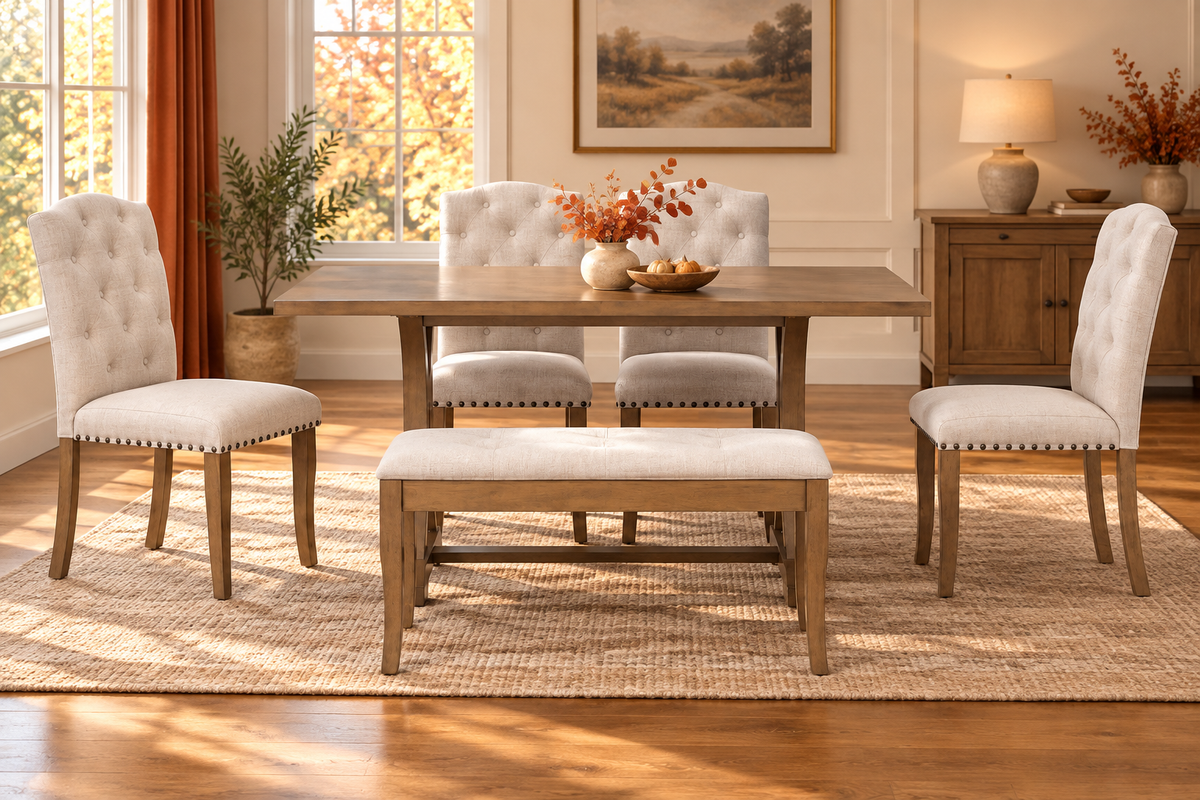
Planning the next room? Read How to Choose a Dining Set With a Bench for a similar approach to dining-room measurements.
Shop the focused collection
Compare narrow entryway storage selected for this guide.
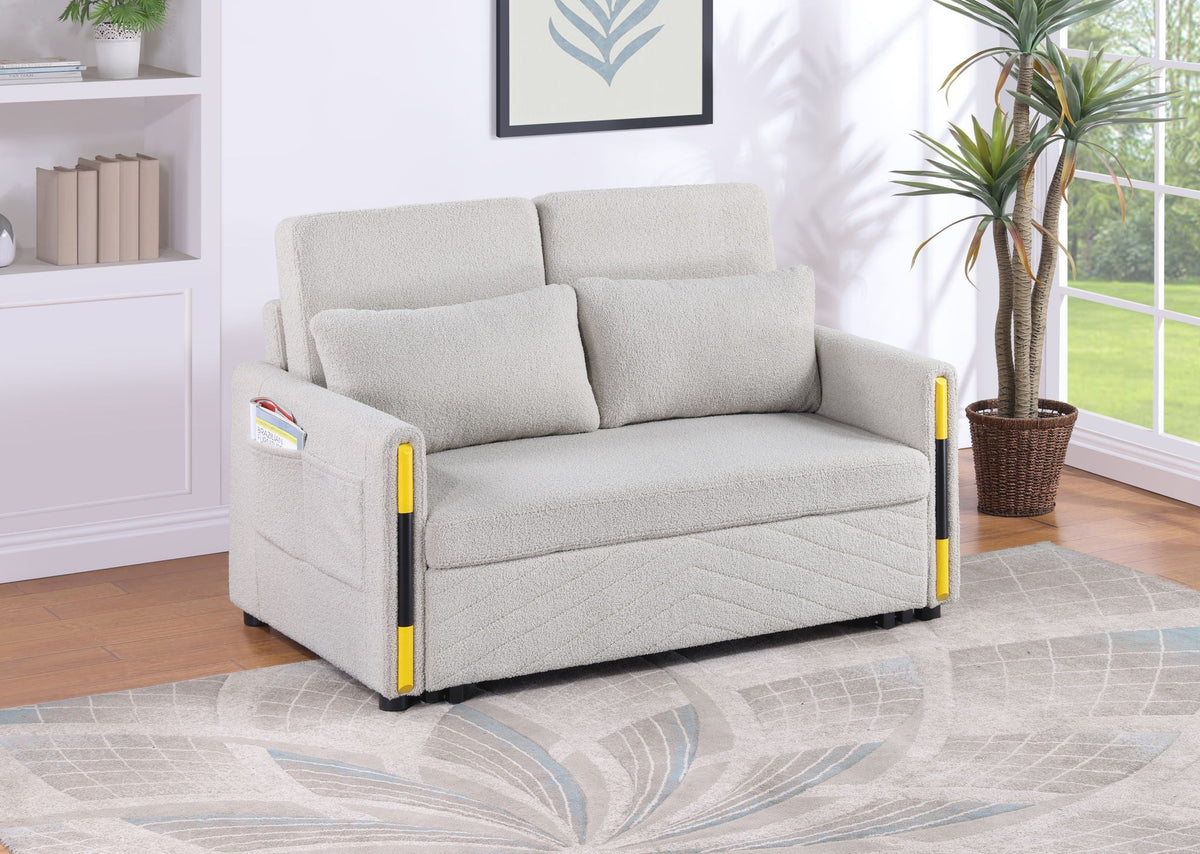
Continue planning your home with our small-space sleeper sofa, corner bookshelf and small-room desk guides.

Leave a comment
This site is protected by hCaptcha and the hCaptcha Privacy Policy and Terms of Service apply.