

Table of Contents
- What Is a Full Body Massage Chair
- S-Track vs L-Track: The Most Important Decision You Will Make
- Key Features to Look for in a High-Quality Massage Chair
- Health Benefits of Regular Use at Home
- Zero Gravity What It Actually Means and Why It Matters
- Full Body Massage Chair Price Ranges Explained
- Best Massage Chair Options by User Type
- Where to Buy a Full Body Massage Chair Online
- What to Check Before You Buy
- FAQs
- Final Verdict
A professional massage runs between $80 and $150 per session. If you go twice a month, that is close to $2,000 a year before tips. A full body massage chair for home costs more upfront, but it pays for itself within the first year and works on your schedule, not the spa's.
The problem is that the market is flooded with options ranging from $500 to over $8,000, and most product listings describe features in technical language that tells you nothing about whether the chair will actually work for your body, your space, and your daily life.
This guide cuts through that. By the end of it you will know exactly what to look for, what to avoid, and which type of chair fits your situation.
1. What Is a Full Body Massage Chair
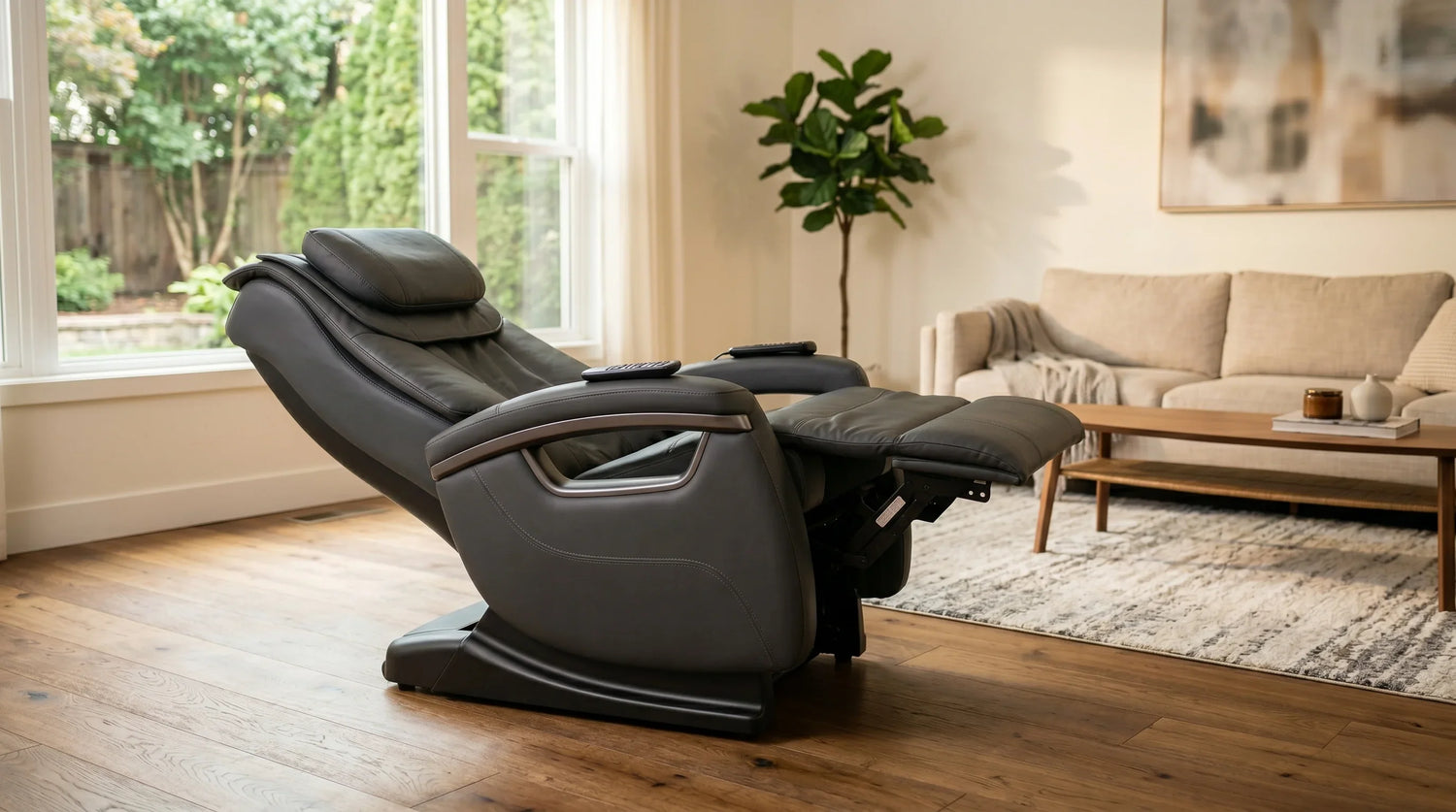
A full body massage chair is a motorized recliner designed to deliver therapeutic massage from your neck and shoulders down to your calves and feet, without a therapist.
The best models use a combination of roller mechanisms that travel along the spine, airbags that apply compression to your arms, hips, and legs, heat therapy panels along the lumbar region, and pre-programmed massage modes that simulate techniques like shiatsu, kneading, tapping, and rolling.
The key distinction between a full body chair and a basic massage chair is coverage. A basic chair works the back only. A full body chair integrates foot and calf massagers, shoulder airbags, and often a reclining zero gravity position that changes how pressure is distributed across the entire body.
If you spend long hours at a desk and deal with shoulder tension, lower back stiffness, or tired legs, a quality home massage chair addresses all of those issues in a single session.
For context on building a complete home workspace that supports your physical wellbeing alongside productivity, our guide on home office setup ideas for 2026 covers the full picture.
2. S-Track vs L-Track: The Most Important Decision You Will Make
Before looking at any other feature, understand the difference between these two roller track designs. It determines how much of your back actually gets massaged.
S-Track
The roller follows the natural S-curve of the spine, from the base of the neck down to the tailbone. It provides excellent upper and mid-back coverage. The limitation is that it stops at the tailbone. Your glutes and upper hamstrings receive no roller massage at all.
S-track chairs are typically more compact and less expensive. They work well for people whose primary tension sits in the upper and middle back.
L-Track
The roller follows the same S-curve but extends further down through the lumbar region, over the glutes, and into the upper hamstrings. This extended track covers the areas where most desk workers and physically active people carry the most tension.
L-track chairs cost more and are typically larger, but for anyone dealing with lower back pain, hip tightness, or hamstring fatigue, the extended coverage is not optional. It is the reason you buy the chair.
If you work from a desk for more than five hours a day, start your search with L-track models.
3. Key Features to Look for in a High-Quality Model
The best full body massage chairs share a specific set of features that separate genuine therapeutic equipment from chairs that simply vibrate.
3D or 4D Rollers
Standard 2D rollers move up, down, left, and right. 3D rollers add depth they can push further into the muscle tissue, replicating the feel of actual thumb pressure. 4D rollers add speed variation within a single stroke, mimicking the rhythm changes a therapist uses naturally. For a home massage chair to feel therapeutic rather than mechanical, 3D is the minimum worth considering.
Body Scan Technology
A quality chair scans your spine before the session begins and automatically adjusts the roller starting position to match your height and back length. Without this, a chair built for a 5'10" body will massage the wrong positions on a 5'4" body. If the product listing does not mention body scan or automatic shoulder detection, the chair is not calibrating to you.
Air Compression Coverage
Airbags built into the shoulder, arm, hip, calf, and foot sections inflate and deflate in sequence to apply rhythmic compression. This increases circulation, reduces swelling in the legs, and gives the sensation of being held rather than just rolled. Check that the airbag coverage includes the shoulders and the calves as a minimum. Chairs that only include hip or foot airbags are missing the areas that benefit most from compression.
Heat Therapy
Lumbar heat panels warm the lower back muscles before and during the roller massage, which allows the rollers to work deeper with less resistance. Some models also include heat in the calf section. Lumbar heat is useful. Calf heat is a bonus worth having if the price difference is small.
Zero Gravity Recline
Covered in detail in section 5, but worth listing here as a non-negotiable feature for anyone buying a chair for back pain or daily stress relief.
Remote Control and App Connectivity
Most quality chairs include a wired or wireless remote. Better models connect to a smartphone app that lets you program custom sessions, adjust intensity by body zone, and schedule sessions in advance. App connectivity is not essential, but it makes daily use significantly more convenient.
4. Health Benefits of Regular Use at Home
The health case for regular massage chair use is well supported and worth understanding before you invest.
Lower back pain reduction. Consistent roller massage along the lumbar region increases blood flow to the soft tissue, reduces muscle spasm frequency, and improves flexibility in the connective tissue surrounding the spine. People who sit for long periods report meaningful improvement in chronic lower back discomfort with regular use three to four times per week.
Stress and cortisol reduction. Research consistently shows that massage reduces cortisol levels and increases serotonin and dopamine output. A 15 to 20 minute session triggers the same parasympathetic nervous system response as manual massage. For anyone managing high-pressure work schedules, this is not a luxury benefit it is a recovery tool.
Improved circulation. The combination of roller movement and air compression mimics the manual techniques used in circulatory massage. Improved circulation means better oxygen delivery to muscle tissue, faster recovery from physical exertion, and reduced swelling in the lower legs after long periods of sitting or standing.
Better sleep quality. Muscle tension and elevated cortisol are two of the most common barriers to quality sleep. Addressing both through a consistent evening massage session has a measurable impact on sleep onset time and depth for many regular users.
Reduced neck and shoulder tension. For desk workers, neck and shoulder tension is often the most immediate complaint. Shoulder airbags combined with upper-back roller work decompress the trapezius and upper shoulder muscles in ways that stretching alone cannot replicate.
5. Zero Gravity What It Actually Means and Why It Matters
Zero gravity in a massage chair is not a gimmick. It is a specific recline angle approximately 128 degrees that distributes your body weight evenly across the chair's surface.
In an upright seated position, your lower spine carries significant compressive load. In zero gravity recline, your knees are elevated above your heart and your torso is tilted back so that the gravitational load on the spine is minimized. NASA developed this position for astronauts to reduce the physical stress of launch.
In a massage chair, zero gravity recline does two things. First, it removes spinal compression during the session, which allows the rollers to work deeper along the lumbar region without the resistance of gravity-loaded muscle. Second, it increases the surface contact between your back and the roller mechanism, which means more consistent pressure across the full length of the track.
For anyone using the chair specifically for back pain relief, zero gravity is not optional. Without it, the chair is working against the compression it is trying to relieve.
Some premium models offer two zero gravity positions a shallower first position for relaxation and a deeper second position for full decompression. If back pain is your primary reason for buying, look for dual zero gravity.
6. Full Body Massage Chair Price Ranges Explained
Understanding what you actually get at each price tier prevents both overspending and disappointment.
$500 to $1,000
Entry-level full body chairs. Usually S-track only, 2D rollers, basic airbag coverage, limited massage programs. The build quality is functional but not durable under daily use. Suitable for occasional use or as a first introduction to home massage chairs.
$1,000 to $2,000
The most practical range for most buyers. L-track models start appearing here. 3D rollers become available. Body scan technology is common at the upper end of this range. Zero gravity recline is standard. Airbag coverage improves significantly. This is where you find chairs that hold up to daily use and deliver genuine therapeutic benefit.
$2,000 to $4,000
Full-featured chairs with 3D or 4D rollers, comprehensive airbag systems, dual zero gravity, heat therapy in multiple zones, app connectivity, and space-saving designs that extend backward rather than forward when reclining. Build quality is substantially better and warranties reflect that.
$4,000 and above
Premium and luxury territory. 4D rollers with advanced rhythm variation, full body stretch programs, chromotherapy lighting, premium upholstery, and extended coverage that includes the neck and head. These are long-term investments for buyers who use the chair daily and want spa-grade results at home.
For most people spending significant time at a desk and dealing with regular back or shoulder tension, the $1,000 to $2,500 range delivers the best value for daily therapeutic use.
7. Best Massage Chair Options by User Type
For tall people (6'2" and above)
Standard massage chairs are calibrated for bodies up to around 6'1". Above that, the roller track may not reach the upper shoulders correctly and the footrest may fall short of the calves. Look specifically for chairs marketed as tall-person compatible, confirm the maximum user height in the specifications, and check that the footrest is extendable.
For shorter users (5'3" and below)
The opposite problem applies. If the roller track is too long relative to your spine length, the rollers will work below or above the correct spinal positions. Body scan technology matters most here; it adjusts the starting position automatically. Avoid chairs without it if you are on the shorter end of the average range.
For back pain relief
L-track with dual zero gravity, 3D rollers, and lumbar heat is the combination that addresses chronic back pain most effectively. Do not compromise on the L-track for a back pain use case.
For stress and relaxation
S-track chairs with comprehensive airbag coverage, multiple preset programs, and heat therapy work well here. You do not necessarily need L-track if the primary goal is relaxation rather than therapeutic back treatment.
For daily desk workers
Shoulder airbag coverage and neck roller reach are the priority. Desk workers carry most tension in the upper back, neck, and shoulders. Confirm the chair covers the shoulder region with both rollers and airbags before buying.
8. Where to Buy a Full Body Massage Chair Online
Buying online gives you access to a wider range of models and price points than most physical stores carry. The key considerations when buying online are return policy, warranty terms, and delivery logistics.
Full body massage chairs are heavy most weigh between 150 and 300 pounds. Confirm whether delivery includes in-home placement or just curbside drop-off. A chair left at the kerb is your problem to move inside and assemble.
Check the warranty length carefully. A minimum of one year on parts and labor is the baseline. Better brands offer two to three years on the mechanical components. Avoid any chair that does not specify warranty terms in writing.
Read verified buyer reviews specifically for long-term durability comments. Chairs often feel excellent in the first month and show mechanical wear by month six if the build quality is poor. Look for reviews from buyers who have owned the chair for six months or more.
9. What to Check Before You Buy
Run through these questions before committing to any model.
Does the chair fit in your space? Full body massage chairs in zero gravity position extend further than their listed footprint. Measure the space with the chair in its fully reclined position, not just the upright dimensions. Space-saving models recline backward rather than forward and need only a few inches of wall clearance.
Does it fit your body? Check the maximum user height and weight specifications. Confirm the shoulder width of the chair matches your build. A chair too narrow compresses the shoulders during the session.
What is the noise level? Roller mechanisms and airbag pumps make noise. For use in a shared living space or bedroom, check buyer reviews specifically for comments about operational noise.
Is the upholstery practical? PU leather is the most common material and cleans easily. Full genuine leather is more durable and breathable but costs significantly more. Fabric upholstery feels softer but absorbs sweat and is harder to clean.
Browse the full selection of full body massage chairs at HomeDeskExpress and find the model that fits your body, your room, and your daily routine.
Frequently Asked Questions
What is the best full body massage chair for home use in 2026?
The best full body massage chair for home is one that matches your body size, primary use case, and available space. For most buyers, an L-track chair with 3D rollers, zero gravity recline, body scan technology, and lumbar heat in the $1,500 to $2,500 range delivers the best combination of therapeutic benefit and long-term durability.
What are the health benefits of using a full body massage chair regularly?
Regular use reduces lower back pain, lowers cortisol levels, improves circulation, reduces neck and shoulder tension, and supports better sleep quality. Most users report meaningful improvement in chronic muscle tension within two to three weeks of consistent daily use.
How much does a good full body massage chair cost?
A genuinely useful full body massage chair starts around $1,000. The most practical range for daily therapeutic use is $1,500 to $2,500. Premium models with 4D rollers and advanced features range from $3,000 to over $6,000.
What is zero gravity in a massage chair?
Zero gravity is a recline position of approximately 128 degrees that elevates your knees above your heart and distributes body weight evenly across the chair. It removes compressive load from the spine during the massage, allowing rollers to work deeper and more effectively along the lumbar region.
What is the difference between an S-track and an L-track massage chair?
An S-track roller follows the spine from the neck to the tailbone. An L-track extends further, covering the glutes and upper hamstrings. L-track chairs provide more complete coverage and are significantly better for lower back pain and hip tension.
Is a full body massage chair good for back pain?
Yes, when the chair includes L-track rollers, zero gravity recline, and lumbar heat. These three features work together to decompress the spine, increase blood flow to the lower back muscles, and deliver targeted roller therapy to the areas where back pain originates.
Can a full body massage chair be used every day?
Yes. Most manufacturers recommend sessions of 15 to 30 minutes once or twice daily. Longer or more frequent sessions do not necessarily increase benefit and can cause temporary muscle soreness if you are new to regular massage therapy.
What should I look for in a full body massage chair for a tall person?
Confirm the maximum supported user height in the specifications, check that the footrest is extendable, and look for models with a longer roller track. Body scan technology is particularly important for taller users to ensure the rollers calibrate to the correct shoulder and spine positions.
Final Verdict
The right full body massage chair for home is not the one with the most features listed on the box. It is the one that fits your body, fits your space, addresses your specific tension points, and holds up under daily use.
Start with the track type L-track for lower back and hip issues, S-track for upper back and relaxation focus. Add 3D rollers, body scan technology, zero gravity recline, and lumbar heat as your baseline requirements. Then match to your budget.
A chair in the $1,500 to $2,500 range that checks all those boxes will outperform a $4,000 chair that misses even one of them.
For context on building a complete home workspace that supports your physical wellbeing alongside productivity, our guide on home office setup ideas for 2026 covers the full picture.



Leave a comment
This site is protected by hCaptcha and the hCaptcha Privacy Policy and Terms of Service apply.