

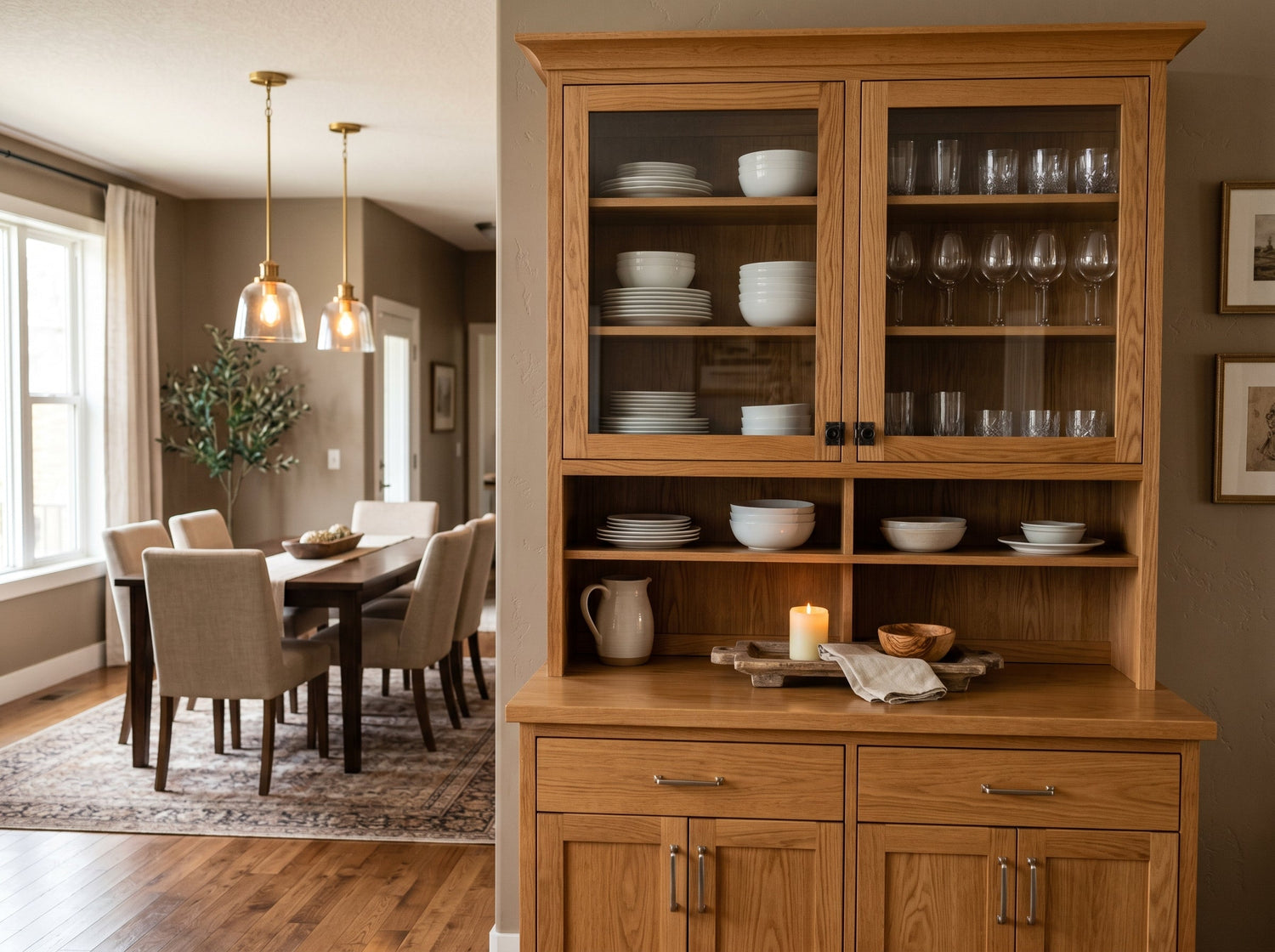
You have the dining table. You have the chairs. But every time guests come over, you are shuffling serving dishes from the kitchen, stacking plates on counters, and wishing you had one piece of furniture that handled all of it. A dining room hutch and buffet solves exactly that problem.
The trouble is that shopping for one feels confusing fast. Hutch or buffet? Combo set or separate pieces? What size actually fits? What materials last? Get the wrong one and you are either cramped or stuck with a piece that wobbles after two years.
This guide cuts through all of it. By the end, you will know the right size for your room, which style suits your home, what materials to prioritize at each price point, and how to avoid the three most common buying mistakes.
What Is a Dining Room Hutch and Buffet?
A dining room hutch and buffet is a two-part storage unit: a lower cabinet (the buffet) topped by an upper display unit (the hutch). Together they give you concealed storage below and open or glass-fronted shelving above, all in one footprint.
The buffet section typically stands 34 to 40 inches tall and includes a combination of drawers, cabinets, and sometimes a center shelf. Drawer widths commonly run 14 to 18 inches to fit standard flatware trays. The hutch portion sits on top, adding another 40 to 52 inches of height, with shelves sized for dinner plates (typically 10 to 11 inches deep) and glass panels to protect displayed items from dust.
Combined, a full hutch and buffet set reaches 72 to 90 inches tall and 48 to 60 inches wide. That footprint makes it one of the larger standalone dining room furniture pieces, which is why measuring your wall space before shopping is the single most important step in the buying process.
Hutch vs. Buffet: What Is the Difference?
A buffet is the lower cabinet only. A hutch is the upper display unit. The terms are often used interchangeably, but they describe two distinct components that can be purchased together or separately.
What a Buffet Does
The buffet (sometimes called a sideboard) handles hidden storage. Most designs include two to four drawers for flatware and linens, plus two to four cabinet doors concealing adjustable shelves. Depth runs 16 to 20 inches, which keeps it flush with the wall and out of the traffic path. A buffet alone works well in smaller dining rooms where a full hutch-and-buffet height would feel overwhelming.
What a Hutch Adds
The hutch component transforms a plain cabinet into a display piece. Glass-panel doors protect china and stemware while keeping them visible. Open shelf designs suit decorative items or everyday dishware you want accessible without opening a door. Most hutches require a matching buffet underneath for structural support they are not freestanding units.
Why Buying a Set Makes Sense
Matched sets share the same finish, wood grain direction, and hardware profile, which eliminates the mismatched look that comes from pairing pieces from different collections. Sets also typically cost 15 to 25 percent less than buying the two components separately from the same manufacturer.
How to Choose the Right Size Dining Room Hutch and Buffet for Your Space
Size selection is where most buyers go wrong. The right dimensions depend on three measurements you should take before visiting any product page.
Measure Your Wall Width First
Leave a minimum of 6 inches of clearance on each side of the piece, ideally 12 inches. A 48-inch-wide hutch and buffet needs at least 60 inches of unobstructed wall. Account for light switches, windows, and door swings. If the wall runs shorter than 54 inches, look for compact designs in the 42 to 46-inch width range.
Check Your Ceiling Height
Standard 8-foot ceilings accommodate full sets up to 84 inches tall with 12 inches of clearance above. Sets taller than 84 inches need 9-foot ceilings minimum. In rooms with crown molding, reduce tolerable height by 3 to 4 inches to avoid a cramped look at the cornice line.
Factor In Walking Space
Allow 36 inches of clearance between the front of the hutch and buffet and the nearest chair or table edge. In a dining room where chairs are pulled out during meals, 42 inches is more comfortable. Anything below 30 inches creates a bottleneck that makes serving feel awkward during gatherings.
Depth and Countertop Use
If you plan to use the buffet top as a serving surface, prioritize pieces with 18 to 20-inch depth. That gives you room to lay platters without items hanging over the edge. Shallower 14 to 16-inch models work for display only.
Best Materials for a Durable Dining Room Hutch and Buffet
Material choice determines how long a piece lasts, how it ages, and how much maintenance it needs. Each material performs differently across the same conditions.
Solid Wood
Solid hardwoods (oak, maple, cherry, ash) are the most durable option available. A well-built solid oak hutch and buffet carries a load capacity of 150 to 200 pounds per shelf without warping. The trade-off is price: quality solid wood sets start around $900 and run well past $3,000 for heirloom-grade pieces. Solid wood also expands and contracts with humidity, so avoid placement against exterior walls in regions with wide seasonal swings in moisture.
Engineered Wood (MDF and Plywood Core)
Engineered wood with veneer finishes offers the visual appeal of wood at 30 to 50 percent lower cost. MDF cores resist warping better than solid wood in high-humidity environments but do not tolerate moisture on edges and surfaces. Plywood core construction is structurally stronger than MDF and handles drawer slide hardware more securely over time. Look for pieces that spec plywood in the carcase and drawer boxes specifically.
Metal Accents and Hardware
Hardware finish matters more than it looks like it should. Soft-close hinges are not a luxury feature on a $1,200 piece they prevent door slap damage to the frame over thousands of open-and-close cycles. Drawer slides rated at 75 pounds or above handle real-world loading with full flatware sets and linens without sagging.
Glass Panels
Tempered glass in hutch doors is the only safe choice. Standard glass shatters into sharp shards. Tempered glass fractures into small rounded fragments, which is critical when the piece is in a space with children. Verify tempered glass specification before buying any hutch with glass doors.
Popular Styles for Dining Room Hutches and Buffets
Style selection comes down to matching the existing visual language of your dining room, not chasing trends. Each major style carries specific design signatures that either complement or clash with surrounding pieces.
Modern and Contemporary
Contemporary dining room hutch and buffet designs use clean horizontal lines, handle less cabinets, and finishes in matte black, natural walnut, or white lacquer. Leg details are minimal or tapered. Glass panels are frameless or use thin metal framing. This style works best in dining rooms with low-profile tables and upholstered chairs in solid colors.
Farmhouse and Rustic
Farmhouse styles lean on distressed wood finishes, visible grain, shiplap back panels, and bin-pull hardware in antique bronze or matte black. Heights often run taller (80 to 90 inches) to create a substantial presence. White and cream finishes dominate, with some designs using a two-tone approach (painted base, natural wood top surface).
Traditional and Formal
Formal dining room sets with hutch and buffet use raised panel cabinet doors, carved bonnet tops, turned legs, and hardware in polished brass or antique silver. Wood tones run toward cherry, mahogany, or dark espresso. These designs pair with upholstered dining chairs with nail-head trim and tables with pedestal bases. Typical width runs 56 to 64 inches for formal dining rooms designed for eight or more guests.
Transitional
Transitional designs blend traditional structure with contemporary finish choices. A transitional piece might use shaker-style cabinet doors (a traditional form) in a greige finish with brushed nickel hardware (contemporary details). This style has the widest compatibility range and is the safest choice if you are not sure of your room's dominant aesthetic direction.
What Is the Average Price Range for a Quality Dining Room Hutch and Buffet?
The average price range for a quality dining room hutch and buffet set runs from $400 to $2,500, depending on material, construction method, and brand.
Under $500: Entry-Level
Sets in this range use MDF cores with laminate or painted finishes. Construction is functional, not structural. Drawer slides are typically basic epoxy-coated slides rated at 35 to 50 pounds. Suitable for renters or buyers who plan to upgrade within five years. Avoid sets in this range that claim solid wood construction verify the spec sheet.
$500 to $1,200: Mid-Range
This is the most populated price segment and where value is strongest. Expect plywood cores, dovetail drawer joints (a sign of better joinery), soft-close hinges, and finish quality that holds up to regular use. Some pieces in this range use solid wood fronts with engineered wood carcases, which is an acceptable construction approach.
$1,200 to $2,500: Upper Mid-Range
Solid hardwood construction becomes consistent at this tier. Adjustable shelf pegs shift from plastic pins to metal cam-lock inserts. Glass is reliably tempered. Finish options expand to include hand-applied stains and glazes. This range is appropriate for buyers who want a piece that lasts 15 to 20 years with normal care.
Above $2,500: Premium and Heirloom
Custom sizing, hand-carved details, dove-tail construction throughout, and warranty periods of 5 to 10 years on structural components define this tier. Appropriate for formal dining rooms where the hutch and buffet is the visual centerpiece of the room.
Dining Room Sets with Hutch and Buffet: Worth It or Not?
Buying a dining room set that includes a hutch and buffet with the table and chairs delivers matched design cohesion, but the trade-offs are real and worth understanding before committing.
Coordinated sets eliminate finish-matching guesswork. Every piece shares the same stain lot, hardware finish, and wood species, so the room looks intentional rather than assembled over time. Sets also offer a price advantage: manufacturers bundle margins, so a five-piece dining set with hutch and buffet typically costs 10 to 20 percent less than purchasing equivalent pieces individually.
The limitation is flexibility. If you want a table that seats 10 but only need a smaller 48-inch buffet, sets force you to match dimensions that may not suit your room independently. Sets also make future replacement difficult: when one piece is damaged, finding a matching replacement years later is rarely possible.
Recommendation: sets work best for buyers furnishing a new dining room from scratch with a defined aesthetic. Buyers who already own a table they love are better served selecting a hutch and buffet that coordinates rather than matches exactly.
Where to Buy a Dining Room Hutch and Buffet Online
Buying a hutch and buffet online requires more diligence than most furniture purchases because the size and weight make returns difficult and expensive. Pieces typically weigh 150 to 280 pounds shipped. A damaged delivery that requires return shipping can cost $80 to $200 in freight fees that are rarely fully covered by seller return policies.
Before purchasing online, confirm three things. First, the seller publishes assembled dimensions (not just box dimensions) for both the hutch and buffet components separately. Second, the product listing includes weight capacity per shelf, not just total piece weight. Third, free shipping policies cover curbside delivery at minimum inside delivery to the room of choice is worth paying for on any piece over 150 pounds.
Specialty home furniture retailers with curated dining collections typically offer better product specification detail and customer service than general marketplaces. They also tend to stock fewer but better-vetted products, which reduces the risk of buying a piece that looks different in person than in photos. If you are exploring the full range of dining and home furniture options in one place, Home Desk Express covers everything from dining storage to bedroom and living room pieces, all with published dimensions and spec details.
3 Buying Mistakes to Avoid
Most returns and regrets in this category trace back to three predictable errors.
Mistake 1: Measuring Only the Width
Buyers measure wall width and stop there. They forget to check ceiling height clearance, depth clearance from chairs and the table edge, and door swing radius if a door sits near the piece. A hutch that fits the wall but blocks a door is a problem every time it is used.
Mistake 2: Choosing Finish Before Choosing Structure
White, black, oak finish is the first thing buyers notice. But finish is also the easiest thing to paint or restain later. Drawer joinery, shelf load capacity, and hinge quality are not fixable after purchase. Evaluate construction specs first, finish second.
Mistake 3: Ignoring Assembly Complexity
Large hutch and buffet sets arrive in two or more boxes and require assembly. On pieces over 180 pounds, solo assembly is not safe the hutch must be mounted to the buffet and anchored to the wall to prevent tip-over. Check whether the seller includes two-person assembly instructions and wall-mounting hardware before ordering.
Frequently Asked Questions
What is the difference between a hutch and a buffet in a dining room?
A buffet is the lower cabinet that sits on the floor and provides hidden storage via drawers and cabinet doors. A hutch is the upper shelving unit that mounts on top of the buffet and typically includes open shelves or glass-panel doors for display. Together they form a complete hutch and buffet set.
What is the average price range for a quality dining room hutch and buffet set?
Quality sets range from $400 to $2,500. Mid-range pieces ($500 to $1,200) offer the best value with plywood cores, soft-close hinges, and durable finishes. Solid hardwood sets start around $1,200 and are appropriate for buyers expecting 15-plus years of use.
How do I choose a dining room hutch and buffet that fits my space?
Measure wall width, ceiling height, and the clearance between the piece and your table or chairs. Allow 36 to 42 inches of traffic clearance in front, 6 to 12 inches on each side, and verify the total assembled height clears your ceiling by at least 12 inches.
What are the best materials for a durable dining room hutch and buffet?
Solid hardwood (oak, maple, cherry) is the most durable option. Plywood core construction with hardwood veneer is a strong mid-range alternative. Avoid MDF-only construction for pieces expected to hold heavy loads. Always confirm tempered glass in any hutch with glass doors.
What are popular styles for dining room hutches and buffets?
The most common styles are modern/contemporary (clean lines, matte finishes), farmhouse/rustic (distressed wood, painted white), traditional/formal (carved details, dark wood tones), and transitional (shaker doors, neutral finishes). Transitional designs have the widest compatibility with mixed dining room aesthetics.
Are dining room sets with hutch and buffet worth buying?
Yes, if you are furnishing a new dining room from scratch. Sets deliver matched design cohesion and a 10 to 20 percent cost saving over buying equivalent pieces separately. They are less ideal if you already own a dining table you want to keep, since sets require matching all pieces to a fixed design.
How do I know if a dining room hutch and buffet is well-built?
Look for plywood or solid wood carcases (not MDF-only), dovetail or dowel drawer joints, soft-close hinges, metal drawer slides rated at 75 pounds or above, tempered glass in door panels, and wall-anchoring hardware included in the box. These details distinguish durable pieces from those that degrade within two to three years of regular use.
Can I use a buffet without a hutch in my dining room?
Yes. A standalone buffet works well in smaller dining rooms where a full hutch-and-buffet height would feel overpowering. It provides all the hidden storage functionality and a countertop serving surface. The hutch component adds display capacity and visual height, which works best in larger rooms where the wall space supports it.
Final Thoughts: Choosing a Dining Room Hutch and Buffet That Lasts
The right dining room hutch and buffet is the piece that solves a real problem in your specific room cramped serving situations, no storage for everyday dishware, a bare wall that makes the dining space feel unfinished. Size, material, and style all matter, but they matter in that order. Measure the room thoroughly before you look at a single product image.
If you are at the stage of comparing specific pieces, prioritize construction specs over finish. A well-built buffet in a neutral finish will serve the room for 15 to 20 years. A beautiful piece with weak joinery and MDF-only construction starts showing wear in two to three years of regular use. Once you have the hutch and buffet sorted, rounding out the room with the right dining room table makes the whole space come together.
Home Desk Express carries a curated selection of dining room hutches and buffets across modern, farmhouse, and traditional styles, with detailed product specs and dimensions for every piece. Browse the full collection at Dining Room Hutch and Buffet to find the set that fits your room and your budget.

Leave a comment
This site is protected by hCaptcha and the hCaptcha Privacy Policy and Terms of Service apply.